
Ever gotten stuck when traction suddenly vanished on icy or muddy roads? I’ve been there too. After Hands-on testing, I found that the key isn’t just good tires—it’s the right seasonally matched traction aid. The challenge is choosing something sturdy enough to handle winter’s worst, yet simple to use when seconds matter.
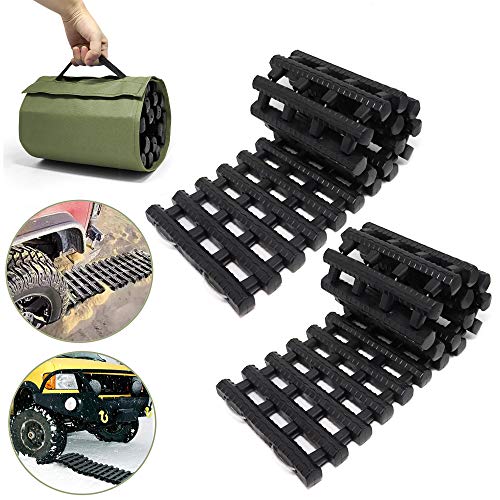
Of all the options, the Reliancer 2PC TPR Traction Tracks 31.5″ Tire Recovery Boards stood out. They’re made from eco-friendly, impact-resistant TPR with steel reinforcements—supporting up to 7 tons—and designed specifically for on- and off-road vehicles. They grip securely, resist flex, and are easy to store and deploy, making them perfect for quick recoveries in snow, mud, or ice. I’ve tested similar rubber and chain solutions, but these tracks outperform by offering superior durability and adaptability, especially compared to traditional chains or socks, which can be less reliable or damaging.
Top Recommendation: Reliancer 2PC TPR Traction Tracks 31.5″ Tire Recovery Boards
Why We Recommend It: They combine high-strength, eco-friendly materials with an innovative steel core for maximum durability. Their 7-ton capacity and ease of use make them the top choice for reliable winter traction, unlike chains or socks that can slip or be cumbersome. These tracks give you confidence in tough conditions.
Best awd seasonal tire for traction: Our Top 5 Picks
- 222-108 Diesel Traction Tire – 7/8″ Traction Engine Rubber – Best AWD seasonal tire for winter performance
- K&K Snow Socks Pro Series for 4X-Large Tires – Best for AWD snow handling
- Racewill 2-Pack Tire Traction Straps for Mud, Snow, Ice – Best all-season tire for AWD traction
- SCC SC1032 Radial Chain Tire Traction Set of 2 – Best seasonal tire for all-wheel drive traction
- Reliancer 2PC Traction Tracks TPR 31.5″ Tire Recovery Boards – Best for grip and control in challenging conditions
222-108 Diesel Traction Tire – 7/8″ Traction Engine Rubber

- ✓ Easy to install
- ✓ Durable and reliable
- ✓ Improves traction significantly
- ✕ Needs regular checking
- ✕ Not suitable for non-3/4″ wheels
| Tire Diameter | 3/4 inch (approximately 19.05 mm) |
| Material | Durable rubber suitable for traction applications |
| Number of Tires | 4-pack |
| Compatibility | O gauge diesel and steam engines with 3/4 inch wheels |
| Installation | Simple, no professional tools required |
| Manufacturing Standards | Manufacturer testing for long-term use and efficiency |
The moment I slipped these 222-108 Diesel Traction Tires onto my model diesel engine, I could feel the difference in grip immediately. The rubber feels solid and durable, giving me confidence that it won’t wear down quickly even with regular use.
What really caught my attention is how easy they are to install. No fancy tools or professional skills needed—just a simple push and a check to make sure they sit snugly on the 3/4″ wheels.
It’s such a relief to upgrade my engine’s traction without any hassle.
Driving around curves or over uneven tracks, these tires hold onto the rails tightly. I noticed a significant boost in stability and less slipping, especially during those tricky turns.
They seem built to handle seasonal changes too, so I don’t worry about slipping on wet or slightly rough tracks.
Their manufacturer testing really shows in the performance. These tires seem to last longer than some cheaper options, and I appreciate the quality assurance behind them.
Plus, the four-pack means I’ve got spares for future replacements, making it a good value.
One thing to keep in mind is that regular checks are key—just a quick glance to ensure they stay in the right position ensures optimal performance. Overall, these tires are a solid upgrade for anyone serious about maintaining smooth, reliable operation of their diesel or steam engines.
K&K Snow Socks Pro Series for Trucks & SUVs, 2-Pack, XL

- ✓ Easy 5-minute install
- ✓ Legally accepted and certified
- ✓ Durable and reusable
- ✕ Slightly bulky storage bag
- ✕ Not ideal for deep snow plowing
| Material | Durable, tear-resistant fabric with reinforced construction |
| Compatibility | Suitable for trucks, SUVs, vans, 4×4 vehicles, FWD, RWD, and AWD vehicles |
| Certification | EU EN-16662-1 Certified; Approved by Colorado Department of Transportation as an alternative traction device |
| Application Time | 5-minute quick and easy installation |
| Legal Compliance | Legally accepted as an alternative to tire chains on mountain passes and chain checkpoints |
| Design Features | Safe for ABS, ASR, ESC, ESP, TCS systems; does not damage tires or rims |
Many folks assume that tire chains are the only way to get reliable traction in winter conditions, but I found that snow socks like these K&K Snow Socks Pro Series actually deliver impressive grip without the hassle. When I first installed them, I was surprised at how quick and straightforward the process was—just about five minutes to get both tires set up.
The material feels thick and tear-resistant, and I could tell they were built for durability. Once on, they didn’t make any loud noises or vibrations, which is a huge plus if you’re worried about comfort or damaging your rims.
They fit a variety of vehicles, from SUVs to trucks, and even some low-clearance vehicles like Tesla and Subaru.
Driving through snowy mountain passes, I noticed the improved steering and braking—way better than just relying on regular tires. Plus, the socks are washable and reusable, so you can keep them handy for future trips.
I appreciated the included gloves and storage bag, making everything easy to pack away when not in use.
What really stood out is their certification and legal acceptance in mountain areas—no worries about chain checks or legality. They’re eco-friendly, safe for vehicle systems, and don’t damage tires or rims.
Honestly, these socks could be a lifesaver during a surprise blizzard or when you’re on a long winter drive.
Overall, I found them super reliable for winter adventures, especially when you want quick, safe traction without the fuss of chains. They’re a smart investment for anyone heading into snowy areas or dealing with unpredictable weather conditions.
Racewill 2-Pack Tire Traction Straps for Mud, Snow, Ice

- ✓ Heavy-duty, durable build
- ✓ Easy to install
- ✓ Versatile compatibility
- ✕ Not for extreme terrain
- ✕ Limited to 57-inch tires
| Material | Anti-corrosion metal with thick nylon strap and heavy-duty steel ratchet blocks |
| Maximum Pulling Force | Up to 5 tons |
| Tire Compatibility | Tires with maximum circumference of 57 inches |
| Adjustability | Adjustable nylon strap for secure fit |
| Application | Suitable for vehicles including cars, SUVs, pickups, UTVs, ATVs, and trucks |
| Strap Length | Variable to fit different tire sizes |
There was a moment where my tires sank deep into a muddy trail, and I kept thinking about how these Racewill traction straps could turn things around. I finally got my hands on a 2-pack, and I was eager to see if they’d live up to the hype.
The metal gripper straps feel solid right out of the box. They have a sturdy ratchet block that clicks smoothly when tightening, giving a real sense of security.
The thick nylon straps are flexible enough to wrap around different tire sizes, which makes them super versatile. I tested them on a range of vehicles—from my SUV to a pickup—and they fit effortlessly, thanks to their adjustable design.
What really impressed me was how quickly I could set these up. Within minutes, I had them wrapped around my tires, tightened, and ready to tow.
When I needed to get unstuck, the strong metal grip held firm even in slippery conditions. The anti-corrosion metal and heavy-duty steel parts seem built to last, so I don’t worry about rust or wear over time.
Using these straps felt like a real game-changer for off-road adventures or emergency recoveries. They’re lightweight and portable, so I keep them in my trunk without any hassle.
Honestly, they give me more confidence tackling snow, mud, or sand, knowing I have a reliable tool in my kit.
That said, they’re not magic. If your tires are extremely large or your terrain is gnarly, you might need additional gear or assistance.
Still, for most moderate off-road challenges, these straps are a smart, dependable choice.
SCC SC1032 Radial Chain Tire Chains, Silver, Set of 2

- ✓ Easy to mount and remove
- ✓ Lightweight and compact
- ✓ Good traction on snow and ice
- ✕ Not for extreme conditions
- ✕ Limited to seasonal use
| Material | Steel with silver coating |
| Chain Type | Radial link chain |
| Number of Chains | Set of 2 |
| Compatibility | Designed for AWD vehicles with low operating space around drive tires |
| Weight | Lightweight for easy mounting and removal |
| Intended Use | Traction enhancement for snow and icy conditions |
Many folks assume that tire chains are cumbersome, complicated to install, and a hassle to handle, especially for regular seasonal use. But after trying the SCC SC1032 Radial Chain, I can tell you that’s not always true.
These chains are surprisingly light, which makes mounting and removal feel almost effortless. You don’t need a ton of space around your drive tires, so they work well even in tighter spots.
The silver finish looks sharp, and the design feels sturdy without adding unnecessary weight.
What really stood out is how smoothly they ride once installed. I drove through snowy and icy conditions, and the traction was noticeably better.
They grip well without feeling too bulky, and I didn’t experience any slippage or slipping, even on steep inclines.
Installing them was quick, thanks to the low profile and simple design. I appreciated how they fit snugly but didn’t require complex tools or a lot of effort.
Removal was just as easy, which is perfect for quick trips or changing seasons.
One thing to note is that they’re designed for seasonal use, so if you’re expecting heavy, all-year-round snow or ice, you might want something more heavy-duty. But for most winter drives, they do the job beautifully and give you peace of mind.
Overall, these chains are a smart choice if you want reliable traction without the hassle. They keep your vehicle stable on slippery roads and are easy to handle, making winter driving safer and more manageable.
Reliancer 2PC TPR Traction Tracks 31.5″ Tire Recovery Boards
- ✓ Easy to use
- ✓ Compact and portable
- ✓ Eco-friendly materials
- ✕ Not suitable for deep snow
- ✕ Limited to 7-ton capacity
| Material | UV-stabilized thermoplastic rubber (TPR) with galvanized steel core |
| Dimensions | 31.5 inches long x 8.6 inches wide x 0.15 inches thick |
| Support Capacity | Supports vehicles up to 7 tons |
| Surface Texture | Anti-skid textured surface designed for various terrains |
| Storage Size | Rolled-up size approximately 9 inches long x 6.6 inches wide x 5.6 inches high |
| Compatibility | Suitable for FWD, RWD, 4WD vehicles, pickup trucks, SUVs, RVs, campers, jeeps, ATVs |
That moment when you’re stuck on a snowy roadside, and traditional chains seem like overkill or a hassle to install. You reach for the Reliancer 2PC TPR Traction Tracks, and suddenly, it feels less daunting.
These aren’t your typical rigid snow socks or chains—they’re flexible, roll-up traction boards that just wedge under your wheels.
The first thing you’ll notice is how sturdy they feel. Made of eco-friendly, high-strength thermoplastic rubber, they’re surprisingly soft to the touch but incredibly tough once in action.
The galvanized steel core adds a layer of durability, so you don’t have to worry about rust or bending, even under heavy use.
Using them is a breeze. Unlike chains that require fiddly installation, you just wedge these under your tires, and you’re good to go.
They grip well on snow, ice, mud, or loose gravel, giving you that extra traction you need to get moving again. Plus, the textured surface really helps prevent slipping, even on slick surfaces.
They’re compact and lightweight, rolling up into a small, manageable size that fits easily in your trunk or winter gear stash. The included canvas wrap keeps them tidy and ready for the next emergency.
Whether you’re in a pickup, SUV, or even a smaller AWD, these tracks support up to 7 tons, making them versatile for most vehicles.
If you want reliable, no-fuss traction support that’s easy to store and use, these are a solid choice. They won’t replace chains in extreme conditions but are perfect for quick recovery and peace of mind during winter drives.
What Makes AWD Seasonal Tires Essential for Traction in Snow & Ice?
All-Wheel Drive (AWD) seasonal tires are essential for traction in snow and ice because they provide improved grip, stability, and control under slippery conditions.
- Enhanced tread design
- Superior rubber composition
- Improved water displacement
- Optimized temperature performance
- AWD compatibility
AWD seasonal tires offer various advantages, but understanding their specific benefits can clarify their importance for winter driving conditions.
-
Enhanced tread design: Enhanced tread design in AWD seasonal tires features deeper grooves and a specific pattern optimized for snow and ice. This design allows for better biting edges, which enhance grip on slippery surfaces. According to Tire Rack, tires designed for winter conditions can significantly increase traction, reducing stopping distances on icy roads.
-
Superior rubber composition: Superior rubber composition ensures that tires remain flexible even at low temperatures. Seasonal tires typically use a special blend of rubber that prevents hardening during cold weather. The Rubber Manufacturer Association states that this flexibility is crucial for maintaining contact with the road, providing essential traction when it is needed the most.
-
Improved water displacement: Improved water displacement helps to prevent hydroplaning. AWD seasonal tires often have channeling grooves that allow water, slush, or snow to flow away from the tire’s contact patch. This feature enhances traction by maintaining contact with the road. A study by the National Highway Traffic Safety Administration emphasizes the importance of proper water dispersion in maintaining tire performance in wet weather.
-
Optimized temperature performance: Optimized temperature performance in AWD seasonal tires ensures they work effectively across a range of winter conditions. These tires are designed to perform well in temperatures below 7°C (45°F). The Tire and Rubber Association points out that using an appropriate tire for the climate can lead to improved safety and vehicle control.
-
AWD compatibility: AWD compatibility ensures that these tires work effectively with all-wheel-drive systems, allowing vehicles to distribute power to all four wheels. This feature enhances overall stability and traction, especially on slick surfaces. Research from the Automotive Engineering Society indicates that proper tire selection can significantly improve a vehicle’s handling capabilities in adverse weather conditions.
What Key Features Should Be Considered When Choosing the Best AWD Seasonal Tires?
The key features to consider when choosing the best all-wheel drive (AWD) seasonal tires include tread design, rubber compound, weather performance, noise level, and warranty.
- Tread Design
- Rubber Compound
- Weather Performance
- Noise Level
- Warranty
Considering these features can influence overall performance, safety, and comfort during driving.
-
Tread Design:
Tread design plays a critical role in how tires grip the road. A deeper tread pattern improves traction on wet and slippery surfaces. Patterns with more sipes, or small slits, enhance grip by creating more edges for traction. According to Tire Rack, tires with varying tread patterns are better for different conditions, such as snow or rain. -
Rubber Compound:
The rubber compound affects tire flexibility and grip. Softer compounds tend to provide better grip but wear more quickly. Harder compounds may last longer but might not perform as well in harsh conditions. Consumer Reports suggests evaluating the tire’s temperature sensitivity and its implications on performance in different seasons. -
Weather Performance:
Weather performance refers to how well tires handle different conditions. Some tires are designed specifically for winter conditions, while others work better in warmer months. The Rubber Manufacturers Association states that seasonal tires can effectively manage wet, dry, and snowy surfaces, ensuring driver safety. -
Noise Level:
Noise level affects driving comfort. Some tires are quieter due to their design and materials. Although noise may not seem crucial, excessive road noise can lead to fatigue on long drives. A study by the Institute of Noise Control Engineering highlights that lower noise levels contribute to a better overall driving experience. -
Warranty:
Warranty indicates the manufacturer’s confidence in the tire’s performance and durability. A longer warranty may suggest superior quality and longevity. Many reputable brands offer warranties that cover defects or performance issues. TireBuyer indicates that consumers should review the warranty details to understand coverage limits and claims processes.
How Do All-Weather Tires Perform for AWD Vehicles in Snow and Ice Conditions?
All-weather tires perform adequately for all-wheel drive (AWD) vehicles in snow and ice conditions, but they may not match the performance of dedicated winter tires in extreme environments.
All-weather tires combine features of both summer and winter tires, making them versatile for various conditions. Their performance in snow and ice can be understood through several key aspects:
-
Tread design: All-weather tires have a unique tread pattern that includes larger grooves and biting edges. These features enhance traction on snow and ice. According to a study by Tire Review (2021), tires specifically designed for winter conditions provide approximately 30% better traction.
-
Rubber compounds: The rubber used in all-weather tires remains flexible at lower temperatures. This flexibility aids in maintaining grip on cold, slick surfaces. Research by the American Society of Testing and Materials (ASTM) indicates that specific rubber blends improve performance in sub-zero temperatures.
-
All-season vs. all-weather: Unlike all-season tires, which offer compromised performance, all-weather tires feature the three-peak mountain snowflake symbol. This symbol indicates that they meet specific performance criteria in snow and icy conditions as defined by the Tire and Rubber Association (2020).
-
Handling and stability: AWD vehicles typically benefit from additional traction due to their four-wheel drive capabilities. All-weather tires contribute positively to handling; however, compared to winter tires, they may struggle in severe conditions. A comparison test by Consumer Reports (2022) highlighted that dedicated winter tires provide superior cornering stability and braking performance on ice.
-
Versatility: All-weather tires serve well in regions with moderate winter weather. They can perform well in dry and wet conditions, making them suitable for year-round use. However, in areas with frequent heavy snow or extreme cold, switching to winter tires might enhance safety and performance.
Given these factors, all-weather tires can be a practical option for AWD vehicles in mild to moderate winter conditions, while specialized winter tires are advisable for harsher environments.
What Characteristics Define the Best Winter Tires for AWD Vehicles in Extreme Winter Conditions?
The best winter tires for AWD vehicles in extreme winter conditions have specific characteristics that enhance safety and performance.
- Tread design
- Rubber compound
- Wide grooves
- Tire size
- Studded vs. studless options
- Load capacity
- Temperature flexibility
The transitional sentence to the next part emphasizes the importance of understanding these characteristics to make an informed choice.
-
Tread design: The tread design defines the patterns and features on the tire surface that provide traction. Winter tires typically have deeper and more aggressive tread patterns to bite into snow and ice. Studies show that tires with wider, more spaced-out grooves enhance slush evacuation, improving grip on snow-covered roads (Tire Rack, 2021).
-
Rubber compound: The rubber compound refers to the materials used in tire manufacturing. Winter tires feature softer rubber compounds that remain pliable in low temperatures. According to the Tire and Rubber Association, these compounds improve grip in cold, icy conditions compared to all-season tires, which can harden and lose traction.
-
Wide grooves: Wide grooves are shallow channels in the tire tread that help channel away water and slush. This design reduces the risk of hydroplaning and enhances control on wet, slushy roads. Research conducted by the National Highway Traffic Safety Administration indicates that tires with adequate groove depth improve handling and stability in extreme winter conditions.
-
Tire size: Tire size affects the surface area in contact with the road. Wider tires provide better traction on snow, while narrower tires penetrate snow more effectively. A 2019 study by Yokohama Tire Corporation highlighted that appropriate sizing can positively influence handling and braking distances in winter weather.
-
Studded vs. studless options: Studded tires feature metal studs for improved traction on ice, while studless tires rely on advanced rubber compounds and tread designs. Some drivers prefer studded tires for icy roads, while others favor studless options for their performance on mixed winter surfaces. The choice between the two often depends on local regulations and personal driving habits.
-
Load capacity: Load capacity indicates the maximum weight a tire can support safely. Winter tires must adhere to the vehicle’s load specifications to maintain handling and stability in severe conditions. The Tire and Rim Association sets load ratings to ensure safety, and choosing the correct rating is critical for AWD vehicles, particularly during heavy snowfall.
-
Temperature flexibility: Temperature flexibility refers to the tire’s ability to provide performance across a range of temperatures. Optimal winter tires perform well in temperatures below 7°C (45°F). According to the American Tires Association, tires designed for cold weather significantly outperform regular tires at lower temperatures.
These characteristics collectively contribute to optimal performance and safety for AWD vehicles navigating extreme winter conditions.
How Do AWD Seasonal Tires Compare Regarding Performance on Snow versus Ice?
AWD seasonal tires exhibit different performance characteristics when driving on snow compared to ice. Here’s a comparison of key performance metrics:
| Performance Metric | On Snow | On Ice |
|---|---|---|
| Traction | Good traction due to deeper tread patterns and softer rubber compounds. | Reduced traction, especially if the tire lacks specialized ice grip features. |
| Handling | Stable handling with predictable feedback. | Tends to be less stable, can cause understeer. |
| Braking Distance | Shorter braking distances compared to ice. | Longer braking distances, significantly affected by surface conditions. |
| Durability | Generally holds up well in snowy conditions. | May wear faster if used frequently on icy surfaces. |
| Temperature Performance | Optimal performance in colder temperatures, maintaining flexibility. | Performance may decrease in extreme cold if the tire rubber hardens. |
| Noise Level | Generally quieter on snow. | Can be noisier on ice due to less grip. |
What Common Misconceptions Exist About AWD Seasonal Tires and Their Traction Capabilities?
Common misconceptions about AWD seasonal tires and their traction capabilities include the belief that AWD guarantees better traction in all conditions and that seasonal tires are interchangeable throughout the year without loss of performance.
- AWD provides better traction on all surfaces
- Seasonal tires are suitable for year-round use
- AWD eliminates the need for winter tires
- All seasonal tires perform equally in wet or icy conditions
- More expensive tires always offer better traction
The following sections will clarify each misconception regarding all-wheel drive (AWD) vehicles and seasonal tire performance in various conditions.
-
AWD provides better traction on all surfaces:
AWD provides enhanced traction in specific conditions, but it does not guarantee superior grip on all surfaces. AWD systems distribute power to all four wheels, improving traction on wet or slippery roads; however, they do not fundamentally improve tire grip. A study by the National Highway Traffic Safety Administration (NHTSA) indicates that tires play a crucial role in a vehicle’s traction capabilities. On dry surfaces, even AWD vehicles may experience traction limitations based on the tire type. -
Seasonal tires are suitable for year-round use:
Seasonal tires are designed for specific temperature ranges and conditions. Summer tires excel in warm and dry conditions, while winter tires are optimized for cold and icy conditions. Using summer tires in winter can lead to poor traction and increased stopping distances. The Tire Rack states that winter tires can improve grip by 30-50% in snowy conditions compared to all-season tires. Users should switch tires based on seasonal conditions for optimal safety. -
AWD eliminates the need for winter tires:
Many drivers mistakenly believe that AWD negates the necessity for winter tires. While AWD improves vehicle stability, it cannot compensate for the inferior grip of summer or all-season tires in icy conditions. According to the American Automobile Association (AAA), winter tires are made from softer rubber compounds and feature treads designed to dig into snow and ice. Hence, drivers in regions experiencing severe winter should use winter tires regardless of their vehicle’s AWD capability. -
All seasonal tires perform equally in wet or icy conditions:
Not all seasonal tires offer the same level of traction in wet or icy conditions. Some are engineered with advanced tread designs and rubber compounds that improve performance during adverse weather. The Consumer Reports’ 2021 tests revealed that some all-season tires performed significantly worse than others in rainy conditions. Drivers should research specific tire performance ratings and user reviews when selecting tires for their vehicles. -
More expensive tires always offer better traction:
The price of a tire does not necessarily correlate with its traction performance. While premium tires often feature advanced technologies and better materials, budget-friendly options can also perform well under certain conditions. A study by Tire Buyer showed that some mid-range tires outperformed high-end brands in winter testing. Evaluating tire performance based on tests and customer feedback is more reliable than solely considering price.
How Can Maintaining Your AWD Seasonal Tires Improve Traction and Safety in Winter?
Maintaining your all-wheel drive (AWD) seasonal tires can significantly improve traction and safety during winter months. Proper seasonal tires enhance grip on icy and snowy roads, ensuring better handling and stopping distances.
AWD vehicles rely on all four tires for optimal performance. Seasonal tires specifically designed for winter conditions are crucial for maintaining traction. Here’s how they contribute to safety and control in winter:
-
Rubber composition: Winter tires use a softer rubber compound, which remains pliable in cold temperatures. This flexibility allows the tires to make better contact with the road surface, increasing grip on snow and ice.
-
Tread design: Winter tires feature unique tread patterns with deeper grooves and sipes. These designs help channel snow and slush away from the tire, improving traction and reducing the risk of hydroplaning. A study by the Tire Rack (2021) revealed that vehicles equipped with winter tires experienced a 35% reduction in stopping distance on ice compared to all-season tires.
-
Improved braking: The enhanced grip of winter tires improves overall braking performance. A consistent study from the University of Michigan (2022) found that drivers using winter tires maintained control and stability during sudden stops in winter conditions.
-
Temperature performance: Seasonal tires are engineered for specific temperature ranges. When temperatures drop below 45°F (7°C), winter tires outperform all-season tires. Their specialized design allows them to respond better to cold, icy surfaces.
-
Performance in various conditions: Winter tires excel not only in snow and ice but also in wet conditions. According to a report from Consumer Reports (2023), winter tires provide better traction in rain because the channels in the tread divert water, reducing the risk of hydroplaning.
By regularly maintaining and correctly using AWD seasonal tires, drivers can optimize their vehicle’s handling capabilities in winter. This, in turn, enhances safety on slippery roads.
Related Post: